How to Spin Up Drupal Test Sites in Minutes: The Fastest Workflow Developers Use in 2026

Speed matters when building and testing Drupal projects. In fact, 93% of Drupal developers recommend DDEV as their local development environment, showing how strongly the community prioritizes fast, reliable ways to launch test environments.
Key Takeaways
| Question | Answer |
|---|---|
| What is the fastest way to spin up Drupal test sites? | Using ready‑to‑deploy templates and containerized environments dramatically reduces setup time. |
| Where can developers launch Drupal demos quickly? | The Drupal Forge platform offers one‑click demo environments for testing Drupal solutions. |
| Are there ready-made templates for testing? | Yes. Developers can explore multiple quick‑launch environments inside the Drupal Forge template library. |
| Can AI help with Drupal testing? | Modern Drupal environments integrate AI tools that assist with content generation, code suggestions, and automated testing workflows. |
| Is spinning up test environments expensive? | Many Drupal Forge templates are available for $0, making experimentation easy for developers and agencies. |
| Why are disposable test environments important? | They allow teams to safely evaluate modules, test updates, and run demos without risking production sites. |
Why Fast Drupal Test Environments Matter for Modern Development
Developers rarely build Drupal projects directly in production. Instead, they rely on test environments where ideas can be evaluated quickly.
Fast environments help teams experiment, run demos for clients, and validate architecture before committing resources.
In 2026, agencies and open‑source contributors alike focus on reducing setup friction. When you can launch a full Drupal site in minutes, collaboration becomes much easier.
This is where cloud templates and automated environments play a major role. They remove the repetitive setup work that slows down experimentation.
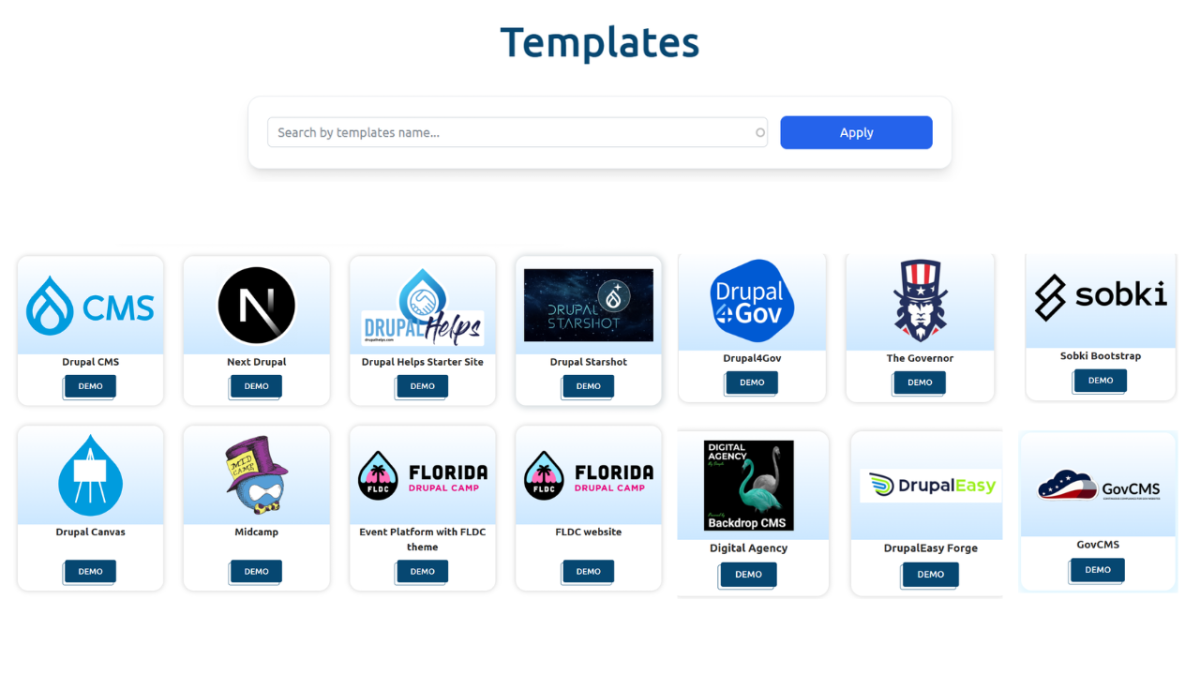
Understanding the “Spin Up” Workflow in Drupal Projects
To spin up a Drupal site means creating a complete working instance ready for development or testing. This includes a database, codebase, and hosting environment.
Traditionally this could take hours or even days. Today, containerized tools and template systems shorten the process to minutes.
A typical rapid setup workflow includes:
Selecting a template or distribution
Launching a cloud environment
Installing Drupal automatically
Loading demo content for testing
Running automated tests
These steps allow developers to quickly learn how a feature behaves before committing it to a production project.
Using Ready‑Made Drupal Templates for Instant Demo Sites
Templates remove most of the complexity from launching a Drupal environment. Instead of configuring modules manually, you start with a curated setup.
Many templates include example content so teams can run a working demo immediately. This is useful when pitching Drupal solutions to clients.
Common template benefits include:
Preinstalled modules and themes
Demo data for testing workflows
Preconfigured permissions and roles
Hosting settings optimized for Drupal
These features allow developers to learn how specific Drupal ecosystems work without building everything from scratch.
AI‑Powered Drupal Development Environments
AI is quickly becoming part of the Drupal development workflow. Modern environments include tools that assist with code generation, content writing, and testing.
These capabilities help teams spin up realistic demo sites faster because AI can generate structured content and configuration suggestions automatically.
AI integration also helps new developers learn Drupal concepts quickly by guiding them through common tasks.
Did You Know?
78% of Drupal developers now use AI tools in their workflow, up from 50% in 2024.
Visual Builders and Flow‑Based Drupal Testing
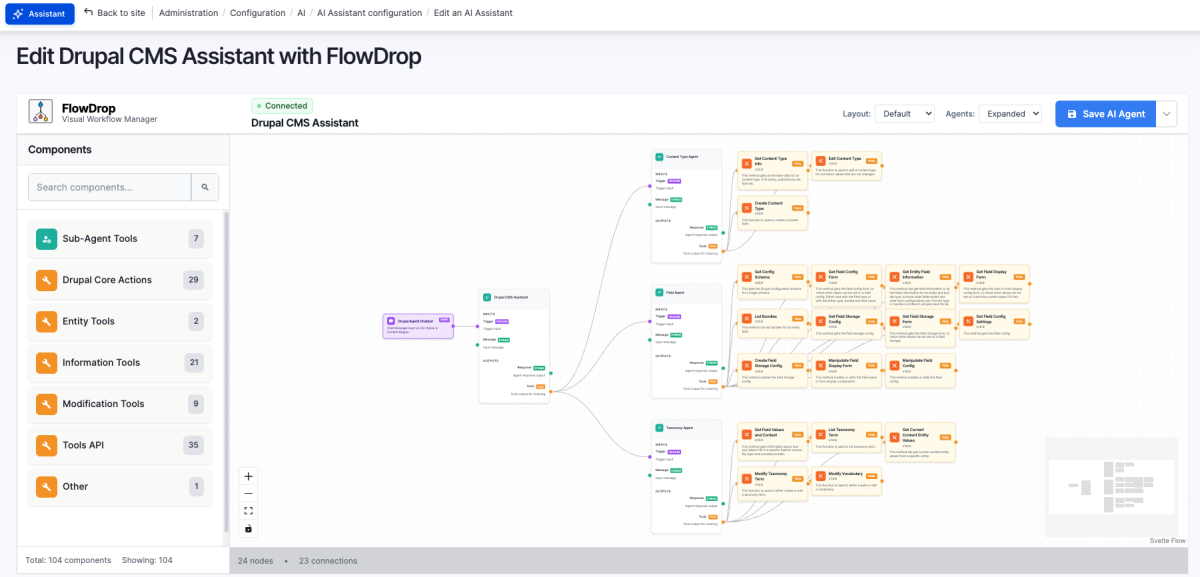
Visual workflow builders are becoming popular for prototyping Drupal features. They allow developers to experiment with site logic and automation visually.
These tools support testing integrations, AI assistants, and content workflows without deep coding.
Developers often use them to simulate real site operations before deploying a solution to production.
Automated Testing for Drupal Sites
Testing is critical when spinning up Drupal environments quickly. Automated test kits help verify functionality immediately after deployment.
The Automated Testing Kit includes 21 essential tests and 16 helper functions designed to streamline Drupal QA processes.
This toolkit allows developers to run checks such as:
Login and authentication testing
404 and 403 error handling
Caching behavior
Entity creation and editing
Sitemap verification
The template is available for $0, which encourages teams to integrate automated testing early.
Launching Government‑Ready Drupal Test Sites
Public sector Drupal projects often require strict accessibility and compliance standards. Testing these requirements early is essential.
Government templates allow teams to create citizen‑focused sites that follow accessibility best practices.
These environments simulate real public service platforms so developers can validate workflows safely.
Community‑Driven Drupal Distributions for Learning
Many Drupal distributions are built collaboratively by the open‑source community. They serve as learning environments and practical demo sites.
For example, Open Y demonstrates how multiple partners can collaborate on a shared Drupal platform.
These community templates help developers learn real architecture patterns used in production systems.
Why High‑Velocity Testing Improves Drupal Teams
Teams that can launch disposable Drupal environments quickly test more ideas and ship better features.
Frequent testing cycles allow developers to catch issues early and demonstrate progress through working demos.
Did You Know?
Containerized dev environments can reduce setup time from days to just minutes.
Rapid environments also improve collaboration between developers, designers, and stakeholders.
When everyone can access a working demo quickly, decision making becomes faster and more transparent.
Conclusion
Fast Drupal testing environments are no longer a luxury. They are essential for modern development teams that want to experiment, collaborate, and deliver reliable websites.
With template libraries, AI‑assisted tools, and automated testing kits, developers can spin up Drupal demo sites in minutes instead of days.
The Drupal community continues to build systems that reduce barriers and support open‑source makers. When developers spend less time configuring environments, they can focus on what matters most, building better Drupal experiences for everyone.